
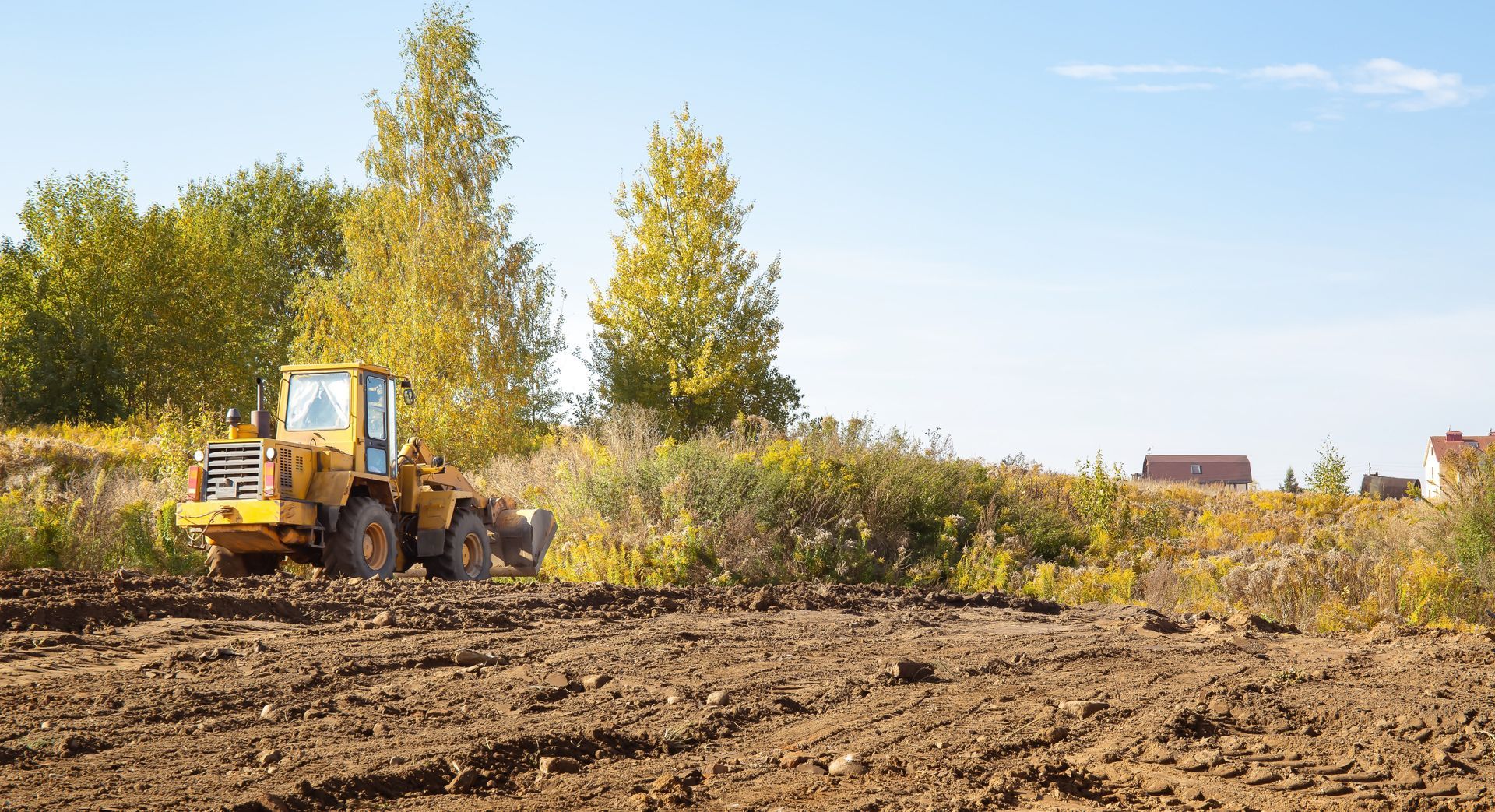
Cleared Land Ready for What Comes Next
Land clearing in Charlotte for residential and small commercial lots with trees, brush, and debris blocking development or landscaping plans
Oakhurst Landscaping and Tree Service performs comprehensive land clearing in Charlotte, handling everything from large tree felling to brush chipping and stump removal so a lot is genuinely ready for its next phase. Property owners who need a site cleared before construction, landscaping, or sale often find that the scope of work—trees of varying sizes, tangled undergrowth, embedded root systems—requires both a full equipment lineup and a crew experienced enough to sequence the work correctly. Oakhurst brings both, backed by an owner with 25 years in the trade and eight years running the company.
The clearing process begins with an assessment of tree sizes and site conditions to determine whether trees are felled directly or lifted by crane, since that decision affects everything from crew positioning to debris staging. Once trees are down, they are limbed and sectioned; brush is chipped on-site or hauled depending on volume; stumps are ground or fully extracted based on what the next phase of work requires. The site is left clean—not partially cleared—so that builders, landscapers, or grading crews can move in without a secondary cleanup step.
Arrange an on-site walkthrough with Oakhurst to review the lot, identify any access constraints, and map out a clearing sequence before work begins.
How the Clearing Sequence Actually Works
On larger lots, the order in which trees come down matters more than it might appear. Trees on the perimeter are typically felled inward to keep limbs and trunk sections from landing outside the clearing boundary, while specimen trees near structures may require sectional removal from the top down. Oakhurst's crews carry the equipment to handle both approaches on the same job—a capability that matters when a lot has a mix of open-grown trees and specimens crowded near existing improvements.
Once the canopy is down, what clients notice immediately is the change in available space—not just the absence of trees, but the removal of the root crowns and brush that would otherwise make grading or landscaping impossible without a second mobilization. The Madison Park area, where Oakhurst has completed multiple large clearing jobs, has residential lots with mature hardwoods whose root systems extend well beyond the drip line, so stump grinding depth is calibrated to account for lateral roots that would otherwise interfere with slab prep or irrigation.
What the service includes—tree felling, limbing, brush removal, stump grinding, and debris disposal—is the full scope, not a partial clear that leaves hauling or grinding to another contractor. Jobs that require crane work for oversized trees or those near structures are quoted with that equipment factored in rather than added as a line item after the fact.
Common Questions About Land Clearing Work
The questions below focus on how land clearing is actually performed—what happens on-site, what drives the decisions made during the job, and what a properly cleared lot looks like when the crew leaves.
What determines whether a tree is felled or removed by crane?
Tree size, lean direction, proximity to structures, and available fall zone all factor into that decision. Trees with no safe fall corridor—common on infill lots in established Charlotte neighborhoods where adjacent fences, structures, or utilities are close—are sectioned from the top down rather than felled in one pass.
How deep are stumps ground during a clearing job?
Stump grinding depth is set based on what the site is being prepared for. Slab construction typically requires grinding six to twelve inches below grade and addressing lateral root mass, while landscaping prep may need less depth. The crew adjusts based on the stated next use.
What happens to brush and debris after trees are felled?
Brush is either chipped on-site using a wood chipper—with chips left on-site or hauled—or loaded and removed in debris haulers. The method depends on volume and whether the client wants material left as mulch or wants the site bare.
How does clearing sequence change when a lot has both open and tight areas?
Open sections are cleared first to create staging space for equipment and debris, then the crew works into tighter areas where access and fall zones are more constrained. This sequencing prevents equipment from being boxed in by accumulated debris.
What does a properly cleared lot look like before a builder arrives?
The surface should be free of root crowns, standing brush, and debris at grade level. Stumps should be ground to the depth required for the planned construction, and the site should allow grading equipment to move freely without obstruction.
Oakhurst Landscaping and Tree Service also performs land clearing in Concord, Mooresville, Huntersville, Fort Mill, and Stallings. To discuss lot conditions and clearing scope, call (704) 201-2278 to set up a site visit.