
Stumps Removed Without Leaving the Yard Unusable
Stump removal in Charlotte for yards with leftover root crowns that block landscaping, create trip hazards, or prevent lawn restoration
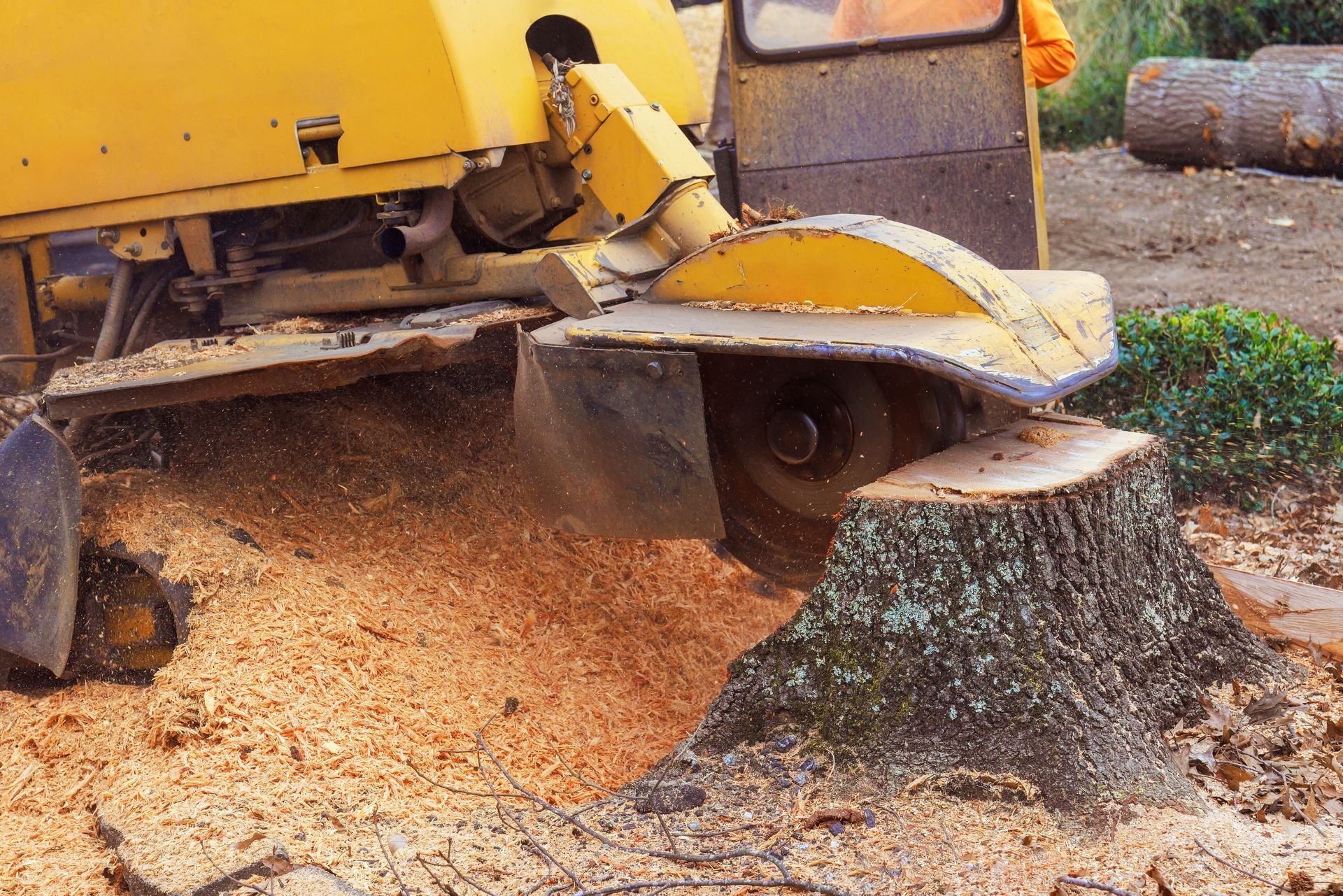
What remains after a tree comes down is often underestimated. The stump itself sits above grade, but the root crown extends laterally in every direction, and that combined mass blocks sod installation, prevents planting, creates mowing obstacles, and in some cases presents a genuine trip hazard on actively used lawn. Oakhurst Landscaping and Tree Service removes stumps in Charlotte using the largest stump grinder available, grinding below ground level and into the root mass so the area can be graded smooth and returned to use immediately after the crew leaves.
Older Charlotte neighborhoods, including areas like Stallings and Belmont, tend to have mature hardwoods whose root systems have had decades to expand. When those trees are removed—whether due to decline, storm damage, or lot work ahead of renovation—the stumps left behind are large-diameter and deeply anchored. Standard residential grinders used by some operators are undersized for that kind of stump, which means they either take significantly longer or fail to reach the lateral root mass that causes problems for replanting and grading. Oakhurst runs equipment sized for the largest residential stumps rather than equipment sized for convenience of transport.
Contact Oakhurst to schedule stump removal as a standalone service or as part of a broader tree or lot clearing project.
Why Grinding Depth and Root Mass Removal Define the Result
The grinder arrives on-site and works the stump down below grade in passes, removing material in layers until the specified depth is reached. For most residential applications, that means grinding six inches or more below the surface and then working the adjacent root flare—the lateral root mass that radiates outward from the base—because leaving that material in place produces visible mounding, kills grass above it as the roots decompose at uneven rates, and prevents even sod installation. The depth is set based on what the area is being returned to: reseed and sod applications need a different outcome than a site being graded for hardscape.
After grinding, the crew grades the area smooth using the grindings themselves as fill material, or hauls them off-site entirely—the choice is the property owner's. What clients see when the job is done is a level surface where the stump was, with no root crown above grade and no protruding root sections that would re-emerge through sod in the first growing season. That clean finish is what distinguishes proper depth grinding from surface-only work that leaves a mound of decomposing root material below a thin layer of grindings.
Stump removal is available as a standalone service for properties that had trees removed previously by another contractor, or as part of Oakhurst's full tree removal and lot clearing scope. No excavation is required, which means the surrounding lawn area is not disrupted beyond the immediate grinding zone.
What Property Owners Ask About the Work
The questions below address how stump removal is performed, what drives decisions during the job, and what the finished area should look like—particularly relevant for older Charlotte-area properties where large-diameter stumps are common after tree removal.
What happens to the root flare and lateral roots during grinding?
The grinder addresses the stump body first, then the operator works the cutting wheel outward along the visible root flare to remove the lateral mass above and just below grade. This prevents the mounding and uneven decomposition that occurs when only the trunk base is ground.
How is grinding depth determined before work starts?
The intended use of the area drives depth. Sod and replanting typically require six to eight inches of depth below existing grade; hardscape installation or areas adjacent to a building pad may need deeper removal to eliminate any root mass that would shift during compaction.
Why does equipment size matter for large-diameter stumps?
Undersized grinders work a large stump in shallow passes and may not reach the root mass at all, leaving a buried obstruction that becomes apparent when the area is graded or planted. Oakhurst uses the largest available grinder specifically because mature hardwood stumps—common in established Charlotte neighborhoods—require both cutting width and machine weight to work efficiently at depth.
What should the area look like when grinding is finished?
The surface should be level with or slightly below the surrounding grade, with no protruding root sections and a consistent fill of grindings or open cavity ready for soil. If grindings are hauled, the area should be open and ready for topsoil and sod without additional cleanup.
How does stump removal fit into a broader tree or lot clearing project?
When stump removal follows tree felling on the same job, the grinder is brought in after the trunk and limbs are cleared, allowing the operator to work the stump without material blocking access. On standalone jobs—where a tree was removed previously—the grinder works directly to the stump without requiring any additional tree work first.
Oakhurst Landscaping and Tree Service also performs stump removal in Concord, Mooresville, Huntersville, Fort Mill, and Stallings. Call (704) 201-2278 to discuss the stumps on your property and what the removal will involve.