
Trimming Done Without Damaging Living Trees
Tree trimming in Charlotte for overgrown or structurally compromised trees in established residential neighborhoods
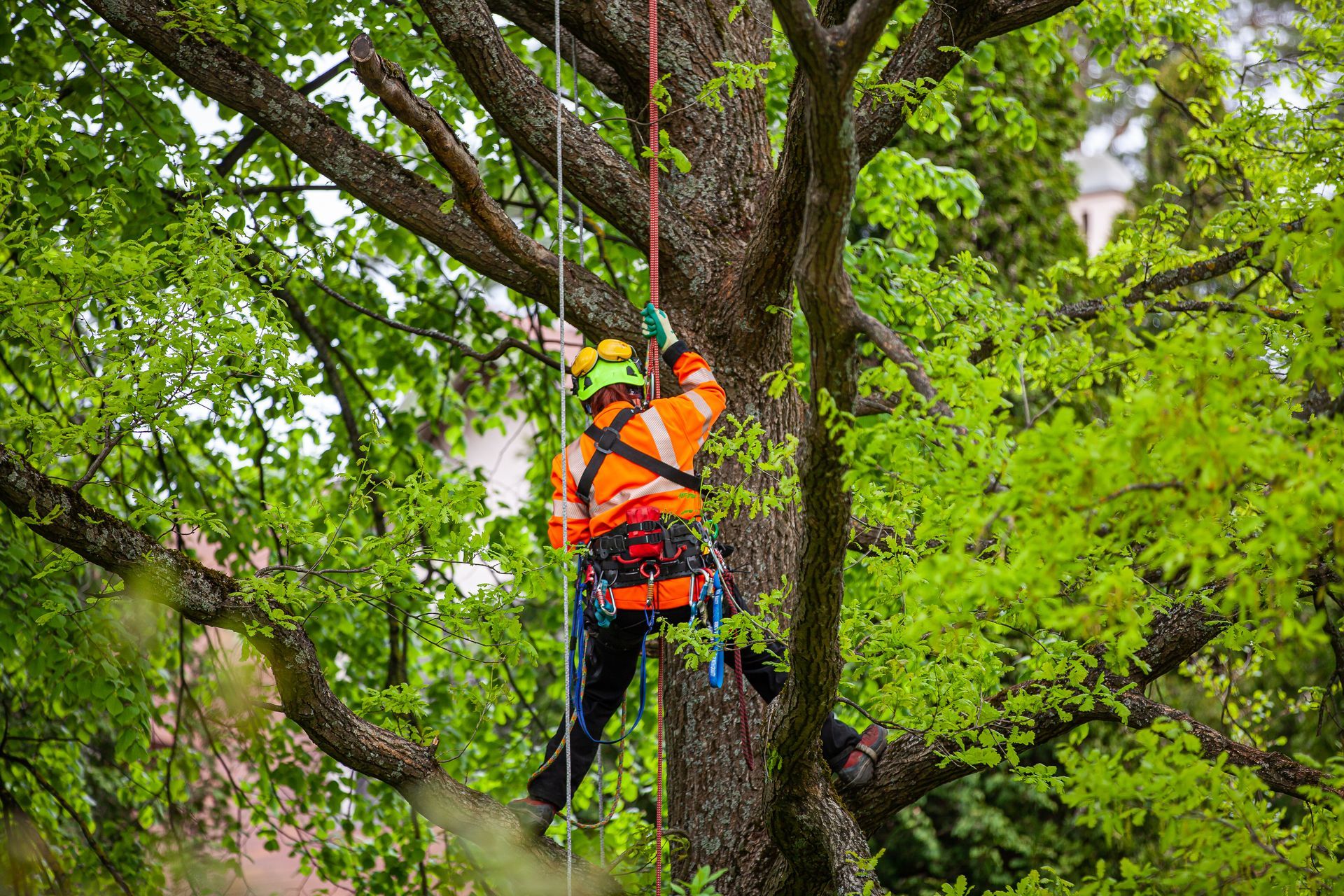
Oakhurst Landscaping and Tree Service performs tree trimming in Charlotte with crews trained to climb or crane-access trees before a single cut is made. Trimming performed during active growing season forces a tree to divert energy toward wound response at the exact moment it needs that energy for growth—a sequence that can permanently weaken or kill a mature specimen. Every trimming engagement begins with a structural and health assessment conducted from the canopy, not from the ground.
The trimming process at Oakhurst Landscaping and Tree Service is scheduled exclusively in late fall or winter, when trees have entered full dormancy and can compartmentalize pruning wounds without physiological stress. Crews climb or crane-access the tree to assess branch structure, identify deadwood, and determine what removal is actually necessary rather than removing volume for convenience. Madison Park and other mature Charlotte neighborhoods contain trees that have spent decades establishing canopy structure—that investment is preserved by removing only what has to go.
Schedule an on-site assessment to review the structure and current condition of trees on your property..
What Correct Trimming Timing Actually Prevents
When a tree is trimmed during active growth, it responds by pushing resources toward wound sites rather than completing the growth cycle it started—a process that leaves cuts exposed longer and creates entry points for disease and fungal infection that a dormant tree would seal off in a single season. Oakhurst Landscaping and Tree Service uses the dormant window from late fall through winter precisely because wound compartmentalization is most efficient during that period, and because canopy structure is fully visible without foliage obscuring branch angles and load distribution.
After trimming is complete, you will notice clean cut surfaces without torn bark, a balanced canopy with visible light penetration, and no excess green material left on site—the debris is cleared as part of the job. In established neighborhoods where large oaks and hardwoods have developed wide lateral branching over decades, a properly timed and executed trim extends the productive life of the tree rather than shortening it through repeated stress responses.
The assessment before trimming distinguishes between branches that are structurally weak and those that are simply large—a distinction that matters when deciding what to remove. Crews operate with the instruction to remove only what is necessary, which protects canopy density and prevents the over-thinned appearance that follows aggressive trimming performed without structural evaluation. Owner oversight backed by 25 years in the trade drives that standard on every job.
What Property Owners Ask About the Work
The following questions address how tree trimming is performed, what decisions are made on site, and what you can observe once the work is finished.
What does a crew evaluate before making the first cut?
The crew assesses branch angles, deadwood presence, signs of disease or structural weakness, and overall canopy balance from inside the tree—not from the ground—so that cuts address real structural concerns rather than simply reducing height or bulk.
Why does trimming during growing season cause lasting harm to trees?
A tree in active growth is running full metabolic processes; cutting during this window forces it to redirect energy toward wound closure rather than completing foliage and root development, and the extended exposure of open wounds invites fungal and bacterial infection before the tree can compartmentalize the damage.
How do crews access the upper canopy on large Charlotte hardwoods?
Crew members climb using certified rigging systems, or a crane is positioned to provide direct access to upper branch structure on trees where climbing is impractical due to height, lean, or proximity to a structure.
What does a properly trimmed tree look like when the work is finished?
Cut surfaces are clean and flush without ragged bark tears, the canopy retains its natural shape without obvious gaps or flat-cut silhouettes, and the ratio of live canopy to overall tree height stays within a range that supports continued healthy growth.
When is the right time to schedule trimming for mature hardwoods in established neighborhoods?
Late fall through winter, once trees have fully dropped foliage and entered dormancy, is the correct window—this allows the crew to read branch structure clearly and gives the tree the full wound-healing period before spring growth resumes.
Oakhurst Landscaping and Tree Service also performs tree trimming in Concord, Mooresville, Huntersville, Fort Mill, and Stallings. To arrange an evaluation of specific trees on your property, call (704) 201-2278 and discuss the current condition and location of the trees with the crew before scheduling.