
Surfaces Built to Hold Their Pattern
Stone and flagstone installation in Charlotte for patios, pathways, borders, and sloped areas requiring stable ground cover
A stone surface that shifts, settles unevenly, or develops gaps within a season is almost always the result of inadequate base preparation rather than the stone itself. Oakhurst Landscaping and Tree Service installs river stone, flagstone, and decorative stone in Charlotte for homeowners who want finished hardscape that holds its position and reads as intentional rather than temporary. The work covers patios, garden borders, walking pathways, and slope stabilization where loose ground cover keeps washing out.
Each installation begins with site preparation and leveling before any stone is set. A compacted base layer is laid first, and stone pieces are arranged in the intended pattern before final placement—so the layout is confirmed visually before it's locked in. Joints are filled with sand or mortar depending on the stone type and the function of the surface. A mortar joint is appropriate where the surface needs to shed water in a controlled direction; sand is used where some drainage through the surface is preferable. Labor, material, and base prep are all included in the scope.
Request a site consultation to review your layout and confirm which stone type and joint method fit the function of the area.
How Stone Installation Addresses Slope and Erosion Problems
On graded or sloped lots—common in Charlotte neighborhoods where lot clearing and tree removal have disrupted existing ground cover—stone serves a structural function beyond appearance. River stone and flagstone placed over a prepared base interrupt the runoff paths that concentrate erosion, and unlike organic mulch, stone doesn't migrate downhill after a hard rain. The base compaction step is what separates a stable installation from one that needs resetting within two or three growing seasons.
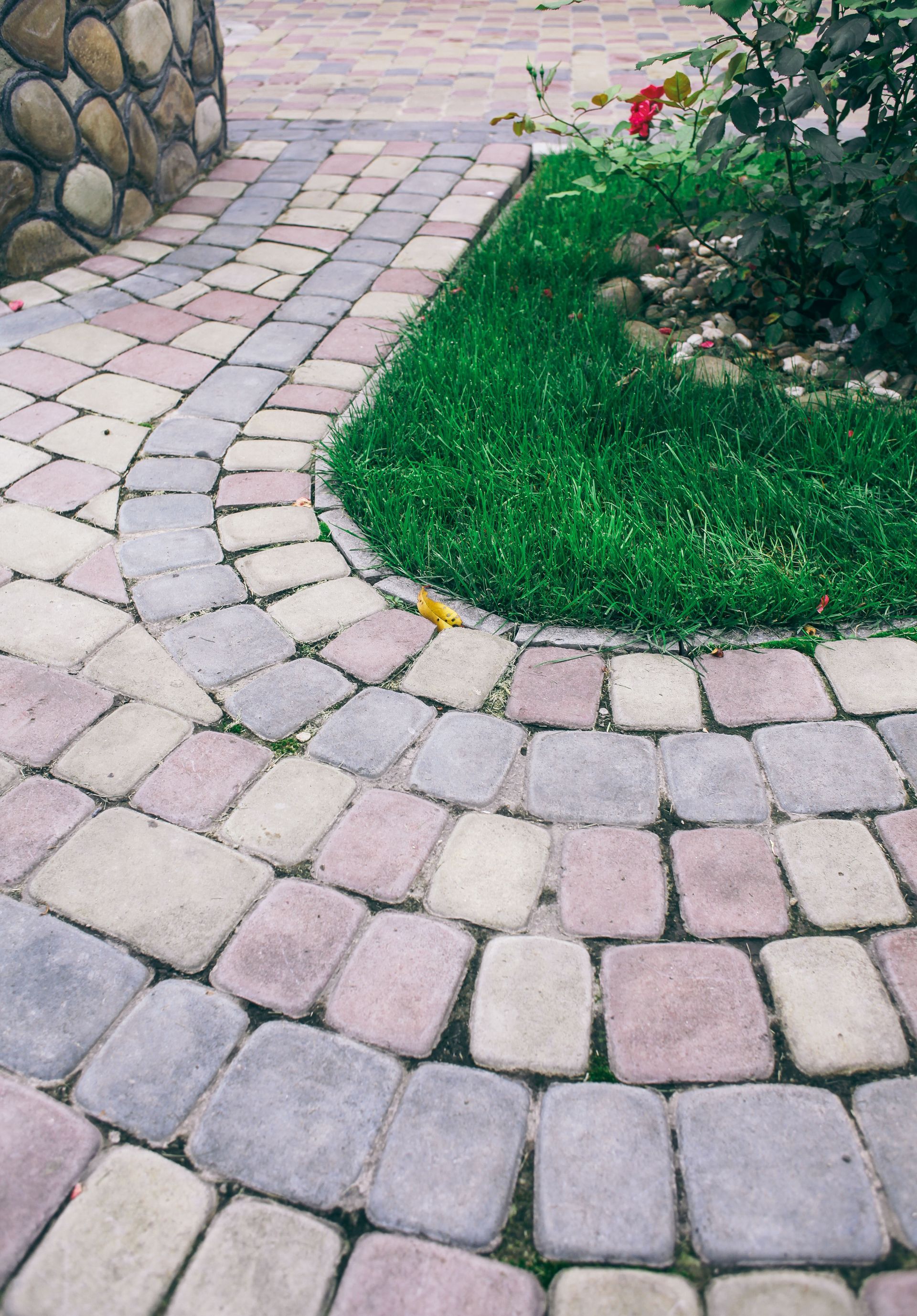
Once the work is complete, the surface sits flush, the pattern is consistent, and edges meet adjacent turf or bed borders without gaps. Flagstone patios in particular take on a finished quality that reads as an extension of the structure rather than an afterthought—the joints are filled evenly, the stone is level underfoot, and there's no rocking when weight shifts across pieces. In areas where Oakhurst has combined stone installation with lot clearing or tree service work, the finished landscape reads as a complete project rather than multiple uncoordinated phases.
Stone type selection depends on the intended use: flagstone is standard for patios and formal pathways where surface flatness matters, river stone works well for borders and naturalistic ground cover, and decorative stone is suited to accent areas and planting bed surrounds. The crew lays out the pattern before setting pieces permanently, which allows for adjustments to spacing and alignment before the base and joints are finalized.
Answers About How the Work Is Done
Stone installation questions tend to focus on what happens beneath the surface and how the finished area holds up over time, particularly on sloped or high-traffic sections of the property.
What happens during site preparation before stone is placed?
The area is graded and leveled, then a compacted base layer is installed to provide a stable foundation. Skipping or compressing this step is the most common reason stone surfaces develop uneven settling after the first season.
How is the joint fill method selected for a given project?
Sand fill allows water to pass through the surface, which is appropriate for drainage-sensitive areas; mortar creates a sealed joint that directs water off the surface in a defined path. The choice depends on the slope, proximity to structures, and whether subsurface drainage is already in place.
How does flagstone installation differ from river stone work?
Flagstone requires more precise leveling of individual pieces to create a walkable, flat surface; river stone is set as a ground cover layer and tolerates more variation in individual piece height. Both require the same compacted base to prevent long-term settling.
What should the surface look like when installation is finished?
Joints are filled consistently, pieces sit without rocking underfoot, and the edge where stone meets turf or bed border is defined and clean. Any variation in the surface plane should be intentional, not a result of uneven base preparation.
Why does pattern layout happen before final placement?
Setting out the pattern first lets the crew confirm spacing, identify pieces that need trimming, and ensure the overall design reads as intended before the base layer and joint fill are committed. Changes are straightforward before that point and difficult after.
Oakhurst Landscaping and Tree Service also installs stone and flagstone in Concord, Mooresville, Huntersville, Fort Mill, and Stallings. To plan your stone project, schedule an on-site visit so the crew can evaluate grade, access, and the most appropriate stone and base combination for your property.