
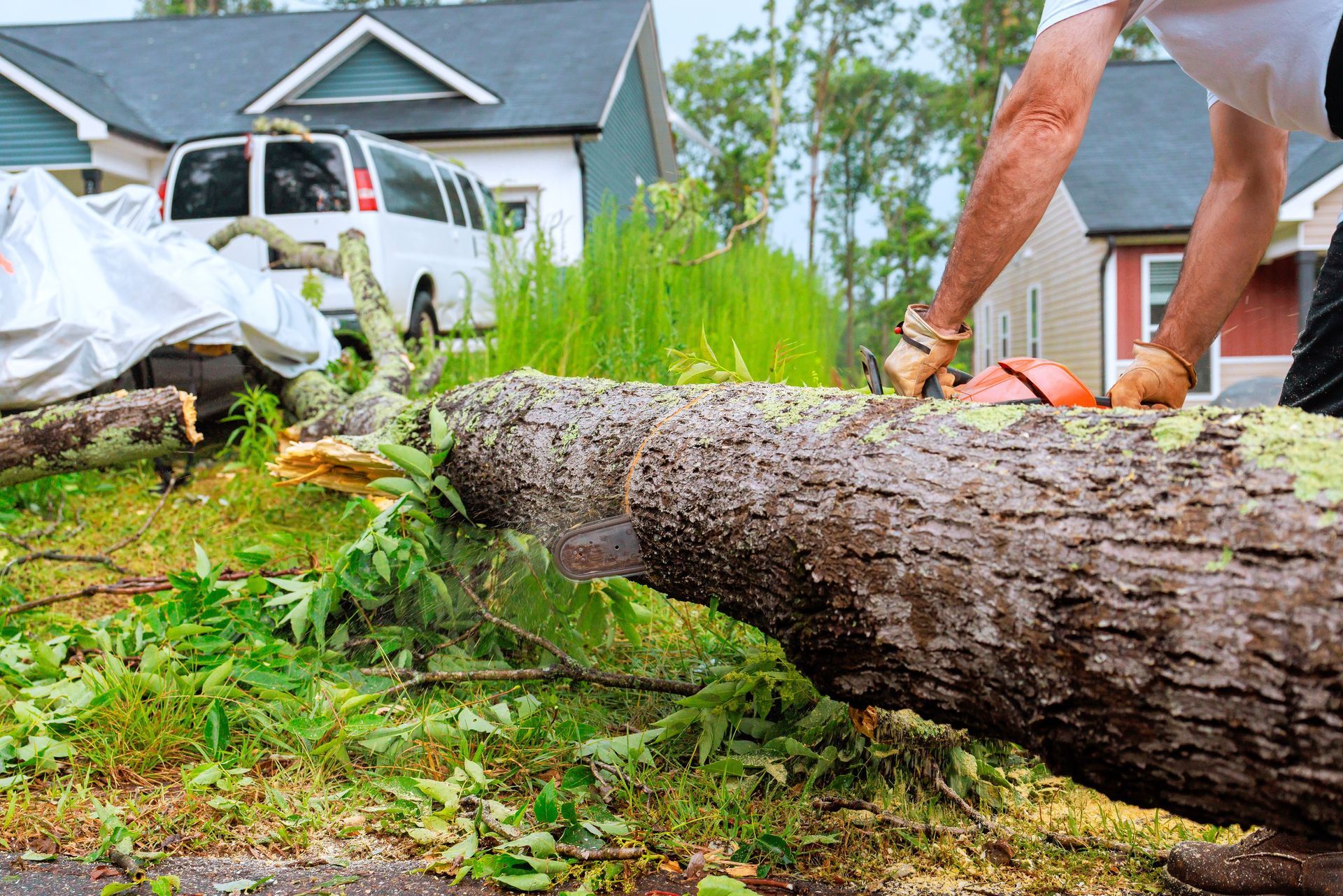
Large Trees Removed When Other Crews Won't
Tree removal in Charlotte for trees over 50 feet or positioned near structures that require crane extraction
The insurance threshold that separates standard tree removal from specialty work is 50 feet—most contractors carry coverage that stops there, which means trees taller than that are routinely declined or handled by underinsured crews who cannot legally perform the extraction. Oakhurst Landscaping and Tree Service maintains coverage specifically for trees over 50 feet, and crane-assisted removals in that size range are standard work rather than exceptions. Charlotte's mature residential neighborhoods contain exactly these trees: oaks, walnuts, and pines planted decades ago that have reached or exceeded that height and now require professional extraction with the right equipment and the right insurance behind it.
Every removal begins with an on-site assessment of tree size, position relative to structures, and existing hazard conditions. Trees under 50 feet are felled and removed by crew using conventional techniques; trees over 50 feet or positioned close to rooflines, utility lines, or hardscaping are handled with crane-assisted controlled extraction, which allows each section to be lowered rather than dropped. Debris is cleared from the site after extraction; the stump remains in place and can be addressed separately through stump grinding if needed. The owner has 25 years in the trade and has completed multiple large crane removals in Madison Park, where the combination of mature tree height and close lot spacing makes controlled extraction the only workable method.
Request an on-site assessment to evaluate the size, position, and extraction requirements for trees on your property before scheduling removal work.
Why Crane Extraction Changes What Is Possible
Felling a large tree by conventional methods—cutting at the base and directing the fall—requires enough clear horizontal space to accommodate the full height of the tree as it comes down. In established Charlotte neighborhoods built on lots with 25- to 40-foot setbacks between homes, that clearance rarely exists for trees above 40 feet, and attempting it without crane access puts structures, utilities, and adjacent landscaping at direct risk. Crane-assisted extraction sections the tree vertically, with each limb and trunk section controlled and lowered to a landing zone rather than allowed to swing or fall freely.
Once extraction is complete, the site shows a cleared canopy zone with no hanging debris or suspended branch material, and the ground area is cleared of wood and brush. What remains is the stump and root flare at grade—a condition that is stable and presents no immediate hazard, and that can be addressed by stump grinding equipment positioned after the removal crew clears the area. The visible change in a yard after a large tree removal is substantial: light distribution shifts, root pressure on nearby hardscape is eliminated, and the risk footprint presented by a compromised or dying tree is removed entirely.
The assessment prior to removal determines whether a tree that appears hazardous can be preserved through targeted pruning or whether structural failure has progressed to the point where removal is the only safe option. Trees that have lost more than 50 percent of their live canopy, show significant basal decay, or have developed severe root damage from construction activity typically cannot be stabilized through trimming alone—that evaluation is made on-site and explained before any work is authorized.
Answers About How the Work Is Done
The following questions address how removal decisions are made, how extraction is carried out for different tree sizes, and what the site condition looks like when the work is complete.
How does the crew decide whether to fell a tree conventionally or use a crane?
The decision is based on three factors assessed on-site: tree height relative to the 50-foot insurance threshold, available clearance in the direction of intended fall, and proximity to structures or utility lines—any one of these factors can make crane extraction the required approach regardless of tree size.
What happens to the debris after a large tree is extracted?
Limbs, trunk sections, and brush are cleared from the property as part of the removal job; the stump and root flare remain at grade and are scheduled for grinding separately if you want the ground returned to a plantable or buildable condition.
How does mature tree density in established Charlotte neighborhoods affect extraction logistics?
Neighborhoods like Madison Park were developed in the mid-twentieth century with minimal setbacks and large-canopy species planted close to structures, which means crane positioning must account for overhead utility clearance and neighboring lot boundaries before extraction begins—a logistics step that adds planning time but makes controlled removal possible where felling is not.
What visual signs indicate a tree has reached the point where removal is necessary rather than trimming?
Significant basal decay at the root flare, major branch dieback affecting more than half the canopy, visible fungal conks on the trunk, or a pronounced lean that developed over a short period are all indicators that structural integrity has declined beyond what corrective pruning can address.
What remains on site after removal and what is the next step if the ground needs to be replanted?
The stump and upper root mass remain at grade after extraction; stump grinding equipment can be brought in afterward to pulverize that material to below grade, leaving the area ready for sod, replanting, or grading work depending on your plans for the space.
Oakhurst Landscaping and Tree Service also performs tree removal in Concord, Mooresville, Huntersville, Fort Mill, and Stallings. Call (704) 201-2278 to schedule an on-site assessment and get a clear picture of what extraction involves for the specific trees on your property.